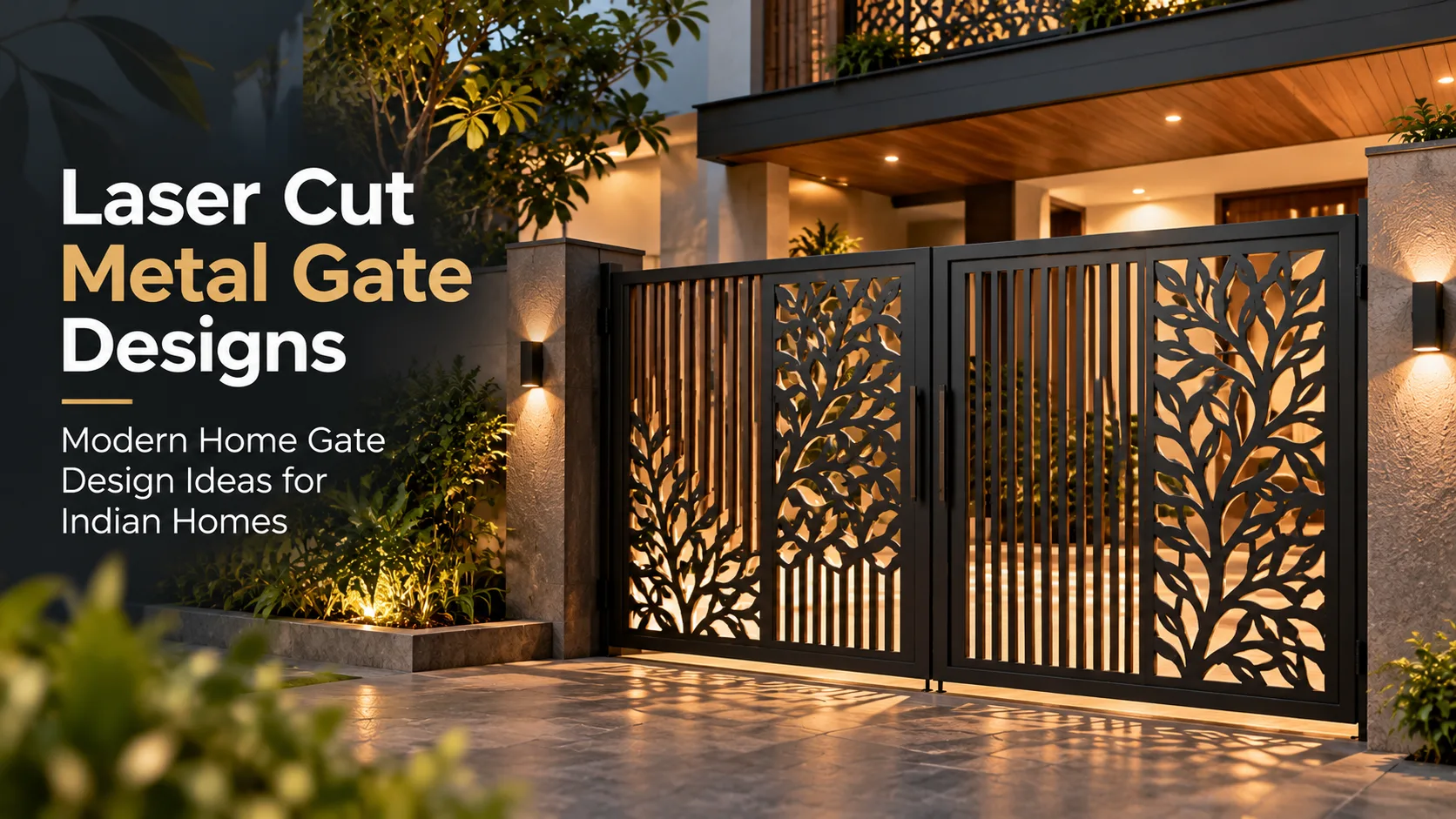
Geometric metal gates are becoming a popular alternative to traditional welded-grill designs in new homes across Delhi NCR, Pune and Hyderabad. Instead of assembling patterns from individual metal bars, fabricators use a CNC fiber laser to cut designs directly into metal sheets. This allows for everything from open jali patterns to solid panels with decorative cutouts.
When comparing a home gate design for your property, consider more than its appearance. The metal, sheet thickness, supporting frame, finish and opening mechanism affect how the gate performs outdoors. Here are eight designs, followed by practical advice on materials, costs and fabrication mistakes to avoid.
Why Laser Cut Is Replacing Traditional Grill Gates
Traditional grill gates use bars or metal sections joined to form a pattern. Laser-cut gates have designs cut directly into a sheet, making detailed curves and repeated shapes easier to reproduce.
For a modern gate design, the main advantages are:
- Repeatable patterns: A clean vector file helps reproduce the same motif across matching panels.
- Fewer visible joints: The pattern is cut from a sheet rather than assembled from multiple bars. The panel still needs secure frame connections.
- More design options: Geometric, floral and traditional motifs can be cut when the file and material suit the process.
- Privacy without a plain plate: Openings can be arranged to limit visibility without making the entrance look like a blank metal wall.
- Different finishes: Depending on the metal and preparation, options include powder coating, PU paint, matte charcoal and wood-texture finishes.
The design must also leave enough metal around each cutout to support the panel. Consider privacy, weather exposure and maintenance alongside appearance.
8 Modern Laser Cut Metal Gate Designs for Indian Homes
Geometric Jali Panel Gate
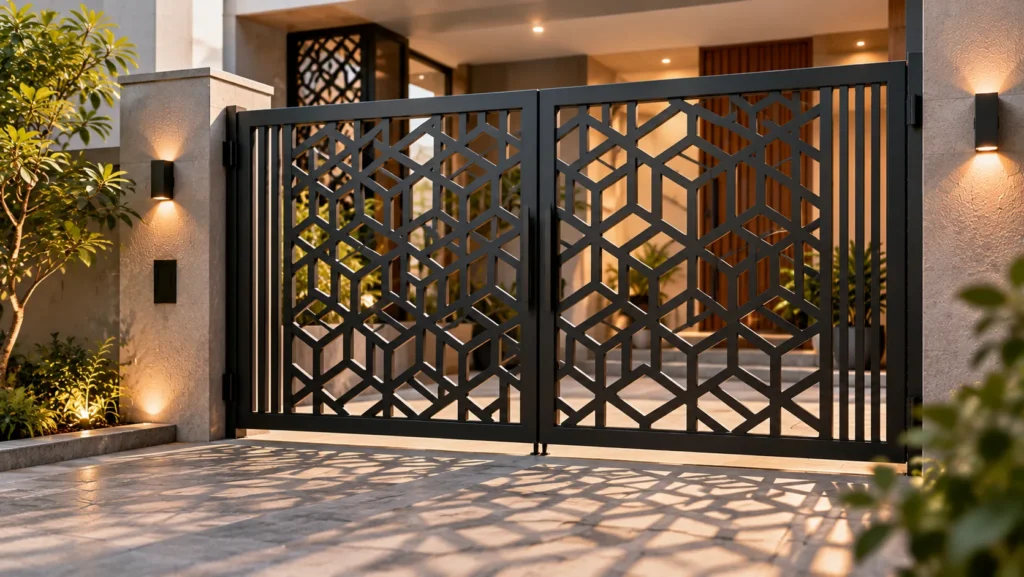
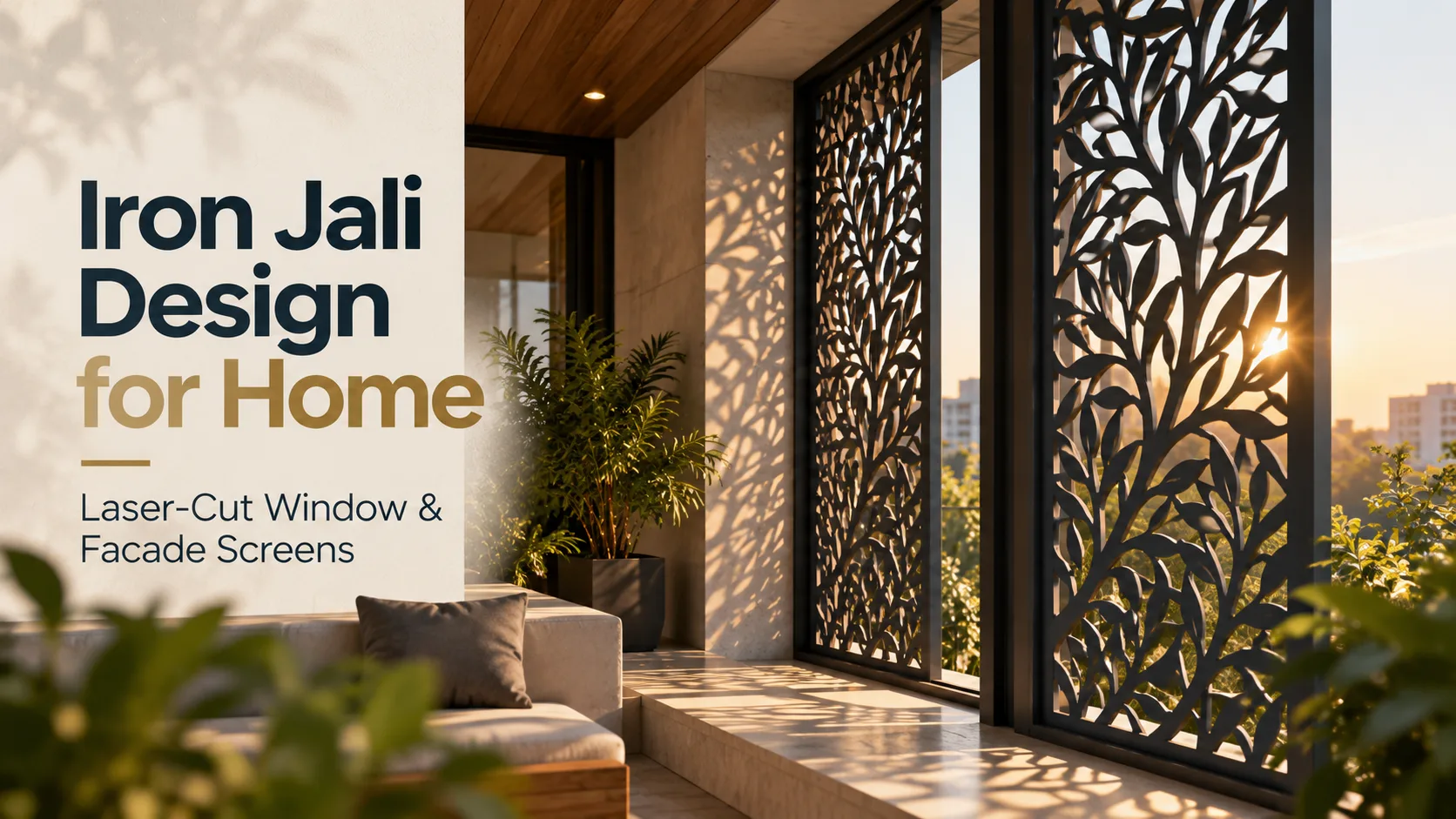
A geometric jali gate uses repeated squares, diamonds, hexagons or intersecting lines, cut as laser cut jali panels rather than assembled from separate bars. It suits contemporary homes with clean facades and straight boundary walls. Larger openings allow more visibility and airflow; smaller ones offer greater privacy. Check the narrow metal sections between cutouts and confirm how the panel will be supported. A dark powder-coated finish can emphasise the pattern.
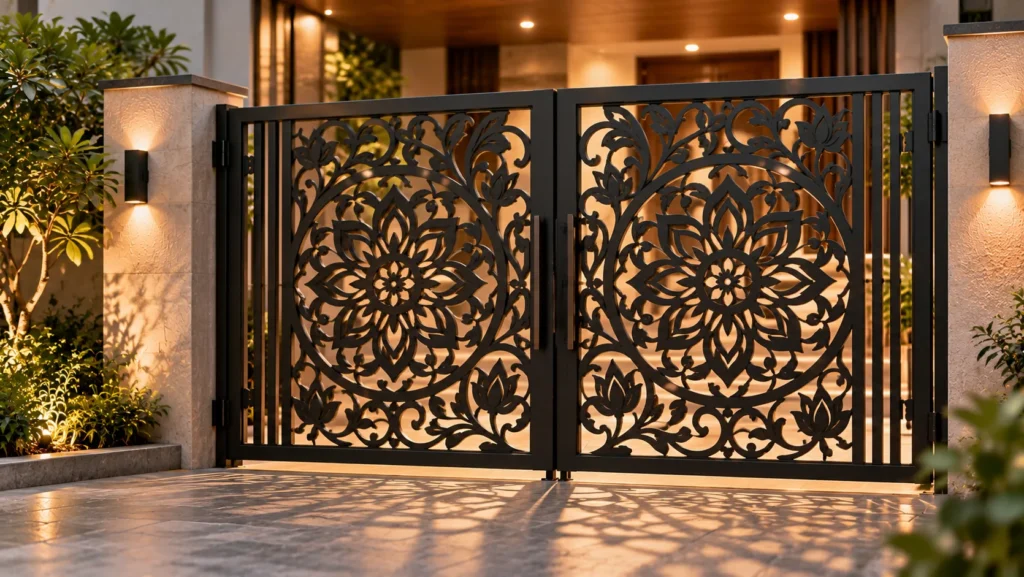
Floral and Mandala Motif Gate
Floral and mandala gates feature petals, leaves, circular arrangements or symmetrical ornamental details. They suit homes with decorative entrance columns or traditional exterior features. The motif can cover the panel or sit in a central section. Fine details leave narrow strips of metal, so review a scaled drawing before cutting. Check the remaining metal, cutouts and privacy level, then select a finish suited to the local weather.
Horizontal Slat With Laser Cut Insert
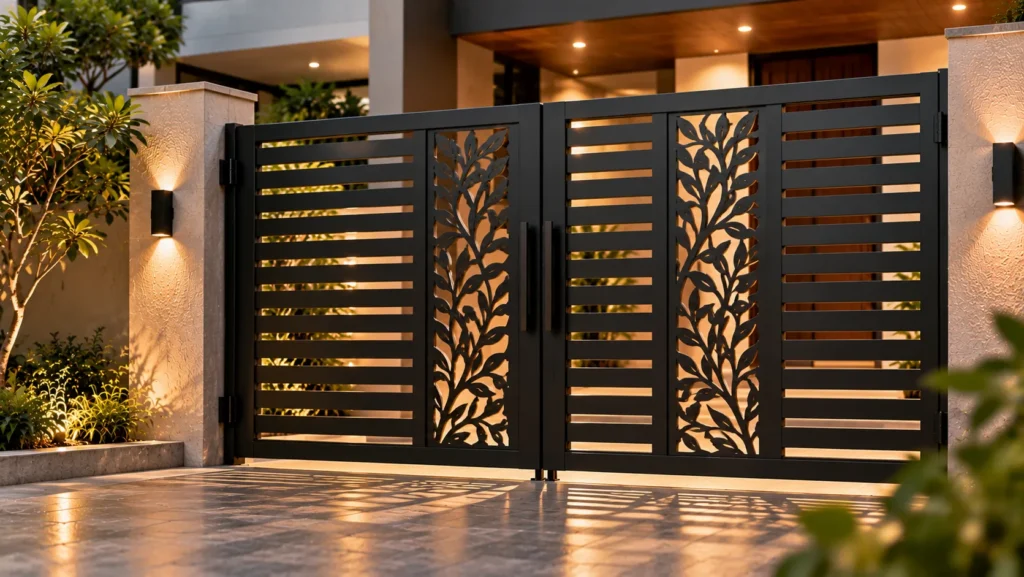
This design combines horizontal metal slats with a smaller laser-cut panel. It suits houses with long windows, horizontal facade lines or simple cladding. The insert can sit centrally or towards one side. Confirm how the slats and insert connect to the frame, especially on a wide gate. Check the gaps from the road and inside the property to make sure the design provides the intended privacy.
Minimal Cutout Full-Sheet Gate
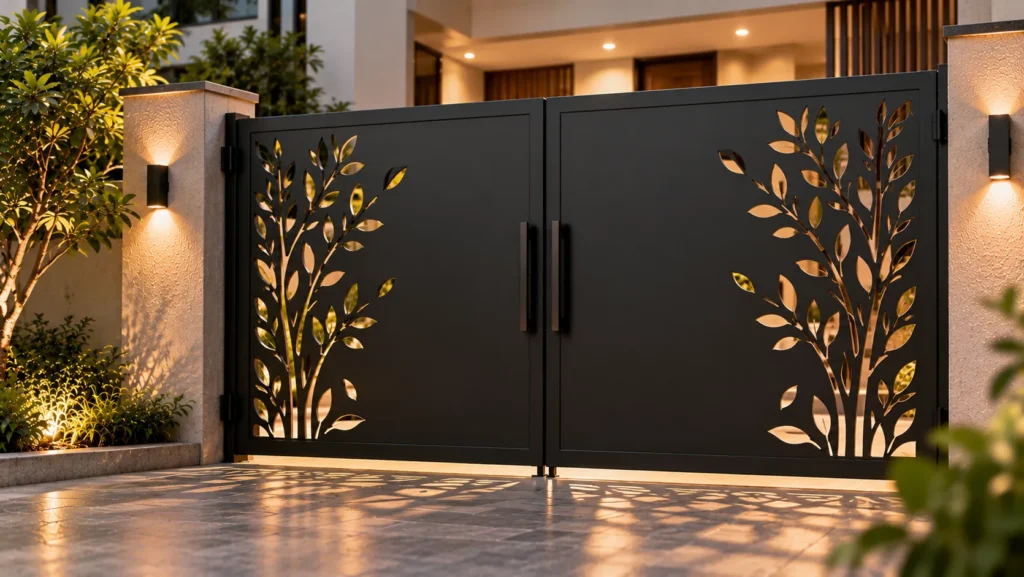
A minimal full-sheet gate has a mostly solid surface with a few slots, lines or geometric openings. It suits homeowners who prioritise privacy over intricate decoration. The cutouts can follow the facade’s architectural lines. However, a solid panel can be heavy and respond differently to wind than an open design. Ask the fabricator to assess the panel, frame, hinges or track and operating mechanism together.
Backlit Laser Cut Gate With LED
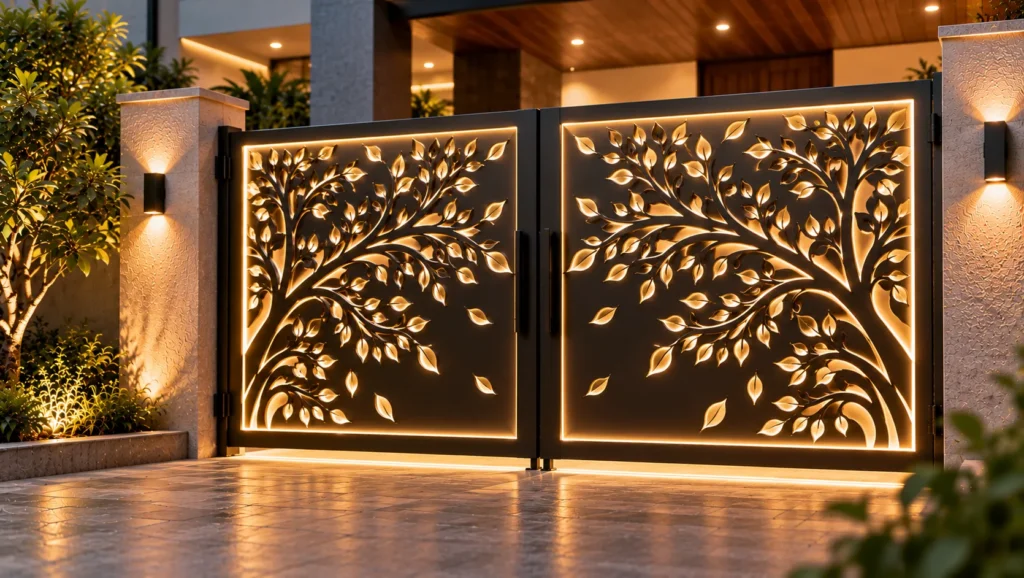
A backlit gate uses lighting behind a patterned panel to make its cutouts visible after dark. Geometric, floral and symmetrical motifs work well with concealed lighting. Plan the light source, wiring access and weather protection before fabrication. The pattern should also look complete when the lights are off. Confirm how the lighting can be serviced and ensure the electrical components are suitable for outdoor use.
Wood and Metal Combination Gate
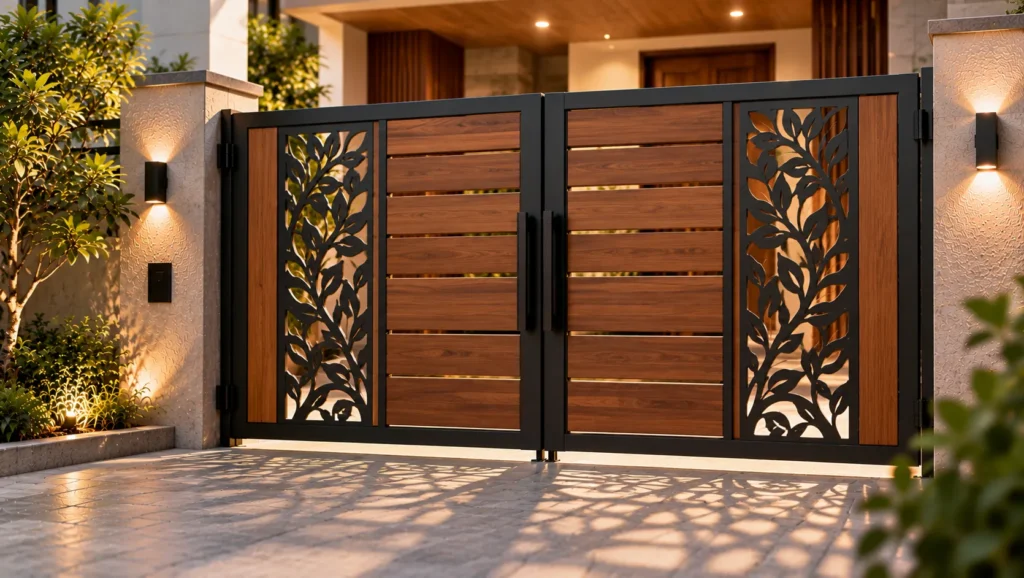
A wood-and-metal gate pairs a laser-cut panel with natural timber or a wood-look surface. The metal adds a precise pattern, while the warmer finish complements stone, textured plaster and timber details. Establish whether the wood element is natural or manufactured because maintenance needs differ. The fabricator must also account for each material’s weight, fixing method and movement so the gate operates properly.
Traditional Motif Gate (Jali, Temple, Warli)
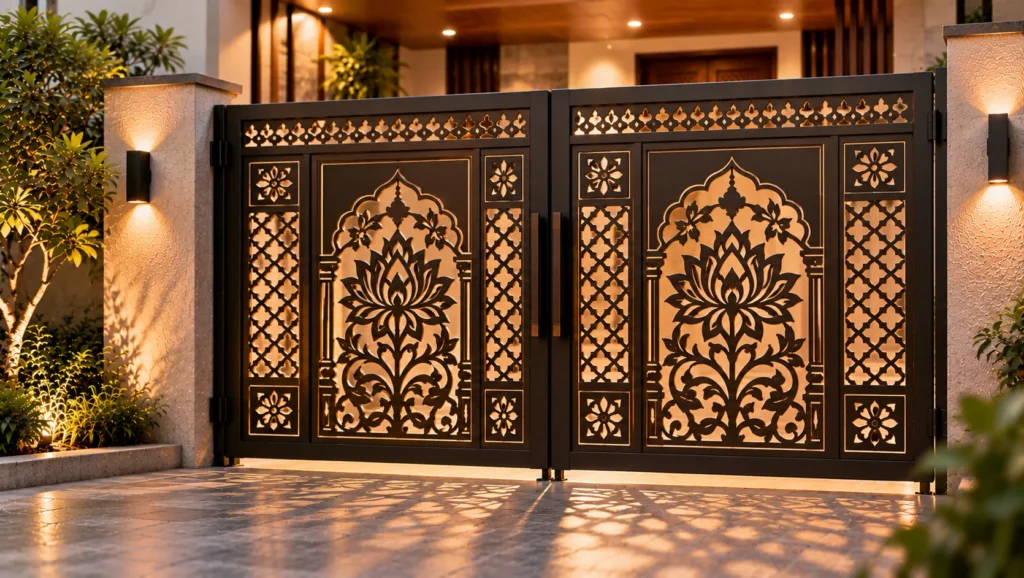
Traditional motif gates feature Indian jali patterns, temple-inspired borders, floral ornament or Warli-style figures. They suit homes with traditional architectural details or a regional design theme. A patterned border keeps the panel simple, while a central motif creates a focal point. Before approving intricate artwork, check that small openings and narrow connecting sections can be cut cleanly at the intended size. Have the vector file reviewed before production.
Laser Cut Sliding Gate for Narrow Plots
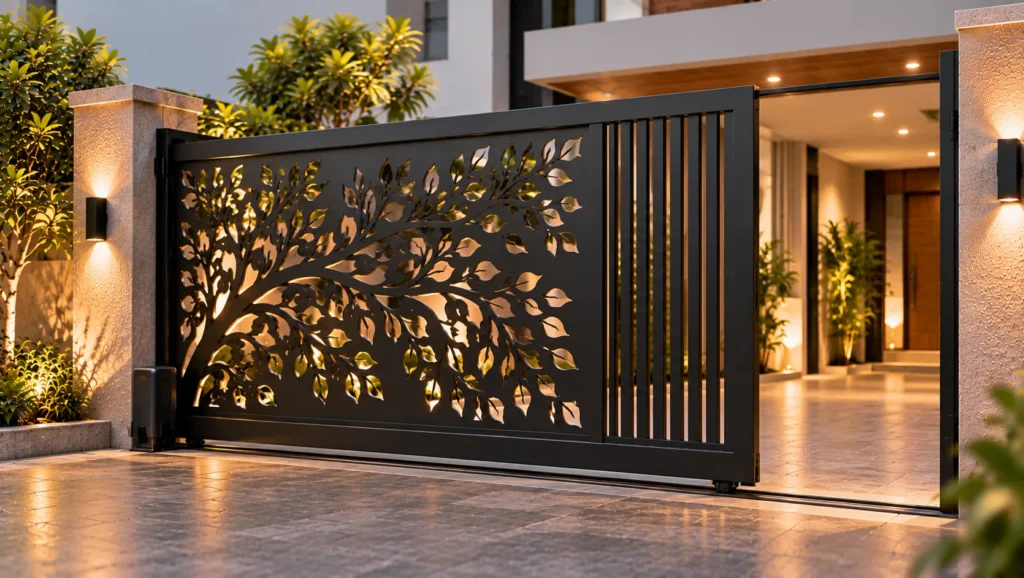
A sliding gate moves sideways rather than swinging into the driveway. It suits narrow plots where a swing gate would obstruct parked vehicles or a footpath. The panel can feature geometric cutouts, horizontal lines or a mostly solid design. Ensure there is enough clear space beside the entrance for the gate to open fully. Confirm the side clearance, track or cantilever arrangement, ground conditions and manual or automated operation before ordering.
Choosing the Right Metal and Sheet Thickness for Your Home Gate Design
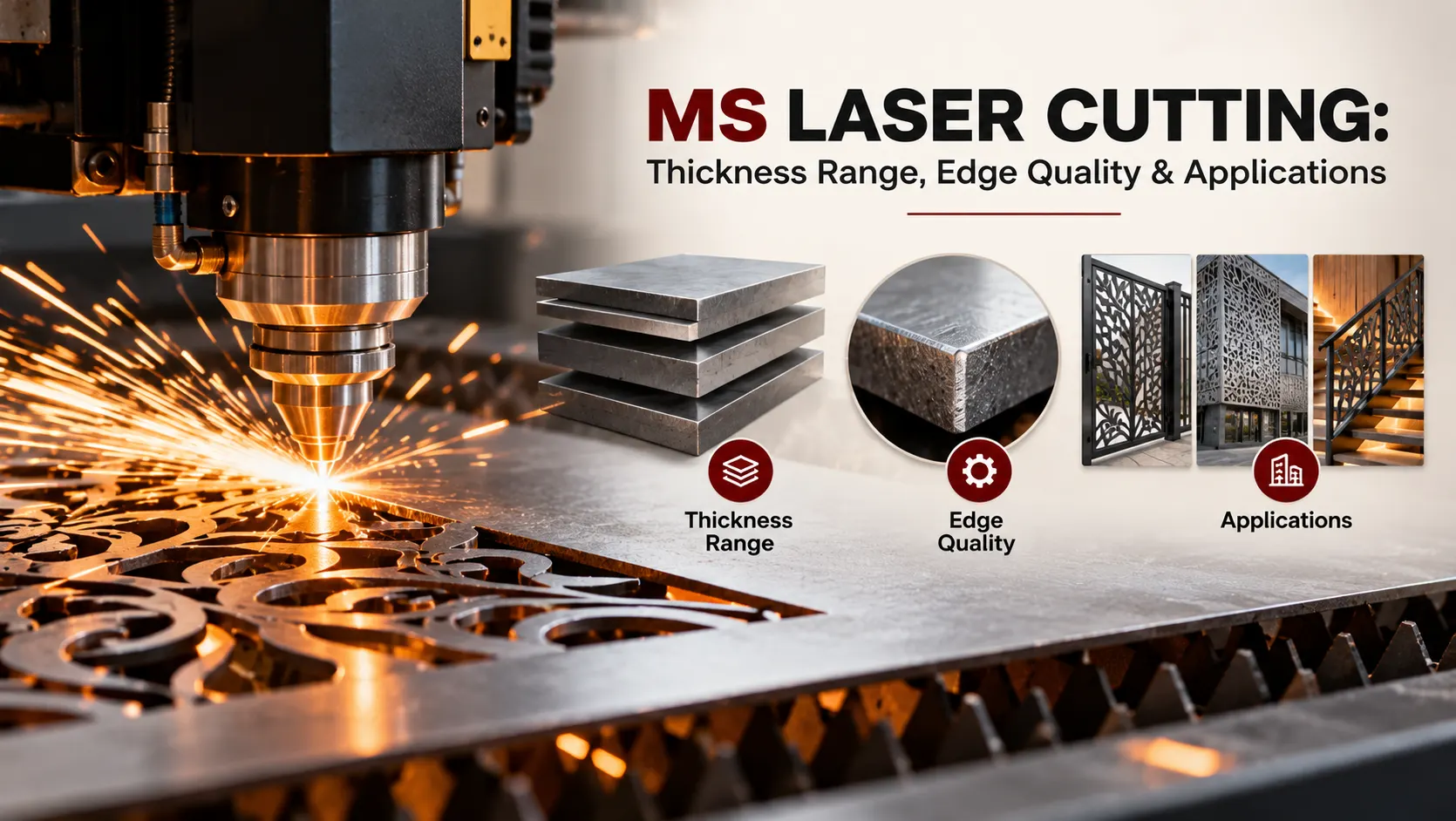
The right metal depends on weather exposure, design and maintenance. Mild steel is widely used for fabricated gates but needs suitable outdoor corrosion protection, so ask how the mild steel laser cutting and the coating system will be handled together. Stainless steel offers corrosion resistance when the grade suits the environment. Aluminium is lighter than steel, so its panel and frame must be designed for the intended size. Brass and copper suit decorative applications where their appearance and upkeep fit the project.
For a main-door metal gate, specify the metal, panel dimensions and supporting frame together. Do not choose sheet thickness by appearance alone. No single thickness guarantees that a panel will not warp. The required specification depends on the metal, panel dimensions, cutout density, unsupported spans and frame design. Ask the fabricator to recommend a thickness for the actual drawing and explain how the panel will be supported.
Metal | Sheet thickness to confirm | Finish | Best suited to |
Mild steel | Based on panel dimensions, cutout pattern and frame support | Suitable exterior coating or paint system | General fabricated gates |
Stainless steel | Based on panel dimensions, selected grade and frame support | Suitable finish for the grade and exposure | Gates where corrosion resistance is important |
Aluminium | Based on panel dimensions, design and support requirements | Compatible coating or finish | Designs where lower panel weight is useful |
Brass | Based on the design and required panel support | Agreed decorative finish | Decorative details and feature panels |
Copper | Based on the design and required panel support | Agreed finish, including the intended natural ageing | Decorative feature panels |
The frame matters as much as the sheet. Ask for the frame sections, support spacing and panel fixing method to be shown in the drawing. For mild-steel gates using batch hot-dip galvanising, consult the applicable Bureau of Indian Standards standard, IS 2629 (Part 1):2025, which covers the process, design, testing and application of hot-dip galvanising for iron and steel. Confirm the appropriate corrosion-protection and finishing system with the fabricator for your specific gate.
What a Laser Cut Metal Gate Costs in India
There is no single price for every laser-cut gate. The final quote depends on the opening size, metal type, sheet thickness, pattern complexity, finish, frame construction, installation and operating mechanism. A pattern with many small cutouts may take longer to cut than a simple design. A large or heavy panel can also change fabrication, hardware and installation requirements.
When comparing a designer main gate, request itemised quotations based on the same opening dimensions and specifications. Ask each fabricator to separate the panel, frame, finish, hardware, installation and automation costs where applicable. This makes it easier to identify whether a lower quote reflects a simpler design or excludes part of the work.
Gate type | Indicative cost (10 x 7 ft) | What drives it |
Basic laser-cut gate | | Metal, panel size, frame and finish |
Detailed patterned gate | | Cutout complexity, cutting time and fabrication |
Premium-finish gate | | Metal choice, surface preparation and finish |
Sliding or automated gate | | Track or guided system, hardware and automation |
Mistakes to Avoid When Ordering a Laser Cut Gate
- Choosing a thin sheet without checking the frame: An inadequately supported panel can flex or vibrate. Ask the fabricator to assess the sheet, frame and support spacing together.
- Leaving cut edges and joints unprotected: Corrosion can develop where coating coverage is incomplete or damaged. Confirm how cut edges, welds, scratches and fixing points will be protected. Where a galvanised panel is then painted or powder coated, the surface preparation that duplex system needs decides whether the finish holds.
- Specifying too many small cutouts: Dense patterns can increase cutting time and leave narrow sections of metal. Review the finished-size drawing before approving it.
- Ignoring the open-area ratio: A very open pattern may provide less privacy than expected, while a mostly solid panel changes weight and wind exposure. Review the design from both sides.
- Using unsuitable exterior paint: Do not assume ordinary enamel paint will protect an outdoor gate adequately. Ask whether powder coating or a suitable PU system is recommended for the metal and exposure, and confirm the required surface preparation.
- Sending only a JPEG: A picture may not provide usable cutting geometry. Ask for a clean vector or DXF file and approve a scaled drawing before production.
Frequently Asked Questions