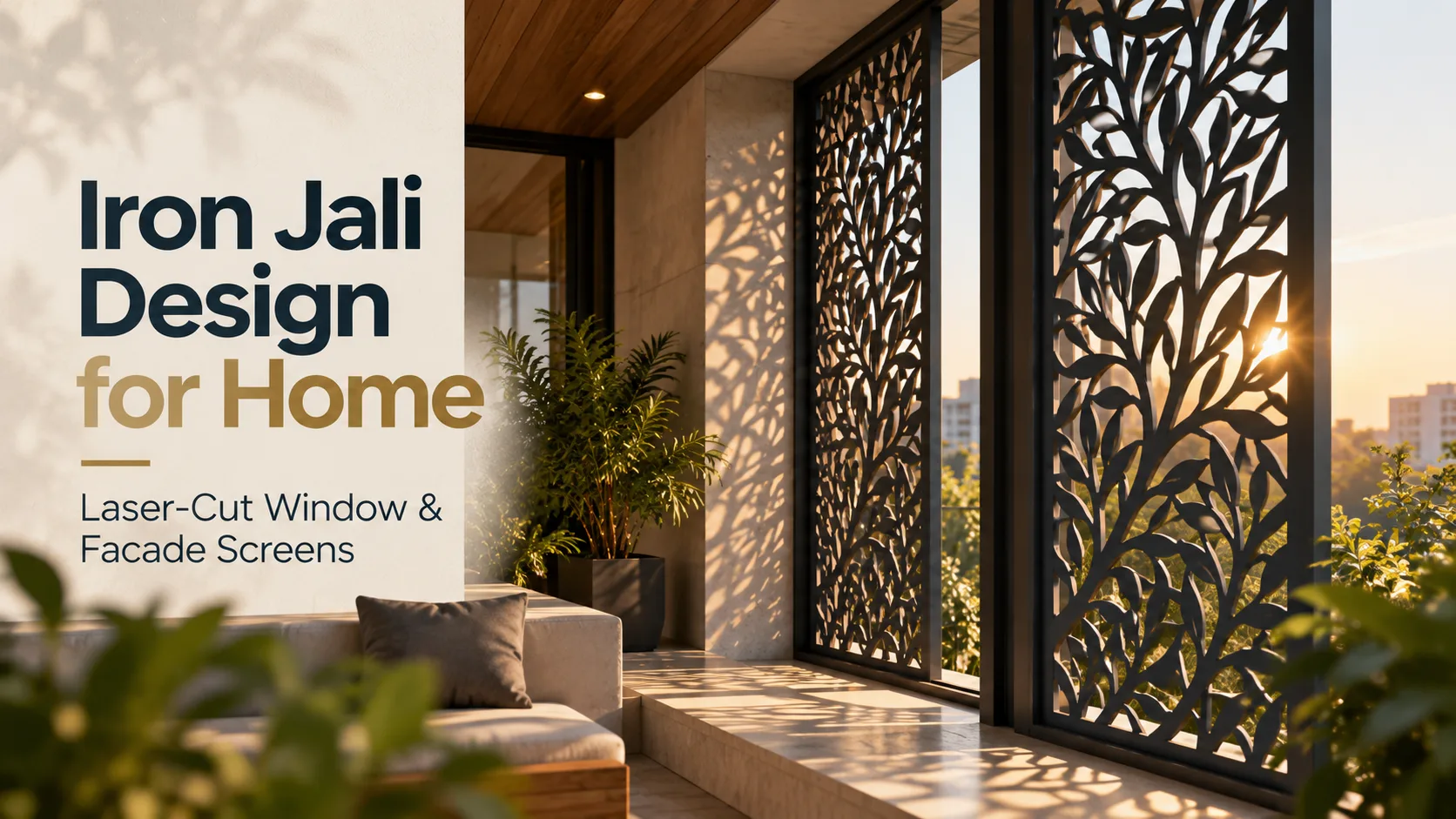
What Is an Iron Jali and Why Does It Suit Indian Homes
A jali is a screen with repeating cut-outs. The openings let breeze through and break harsh sunlight into a softer, patterned glow, while the solid parts block direct views. Stone and wood jalis do this too, but iron adds strength. That makes it a sensible choice for gates, ground-floor windows, and anywhere security matters.
The trade-off is worth knowing early. Iron is heavy, and without a proper coating, it rusts, especially in monsoon humidity or coastal air. Most iron jali problems come from skipped finishing rather than the metal itself. The Iron Jali Cost and Rust Care section below covers how to avoid them.
Iron Jali Design Ideas for Home
You do not need dozens of patterns. You need the right one for the opening and the detail level your material can hold. One rule applies to all of them: iron suits bold patterns with larger gaps, not very fine detail. Thin, intricate cut-outs are fragile, harder to coat evenly, and tend to clog with paint and dust.
Geometric Patterns for Modern Homes
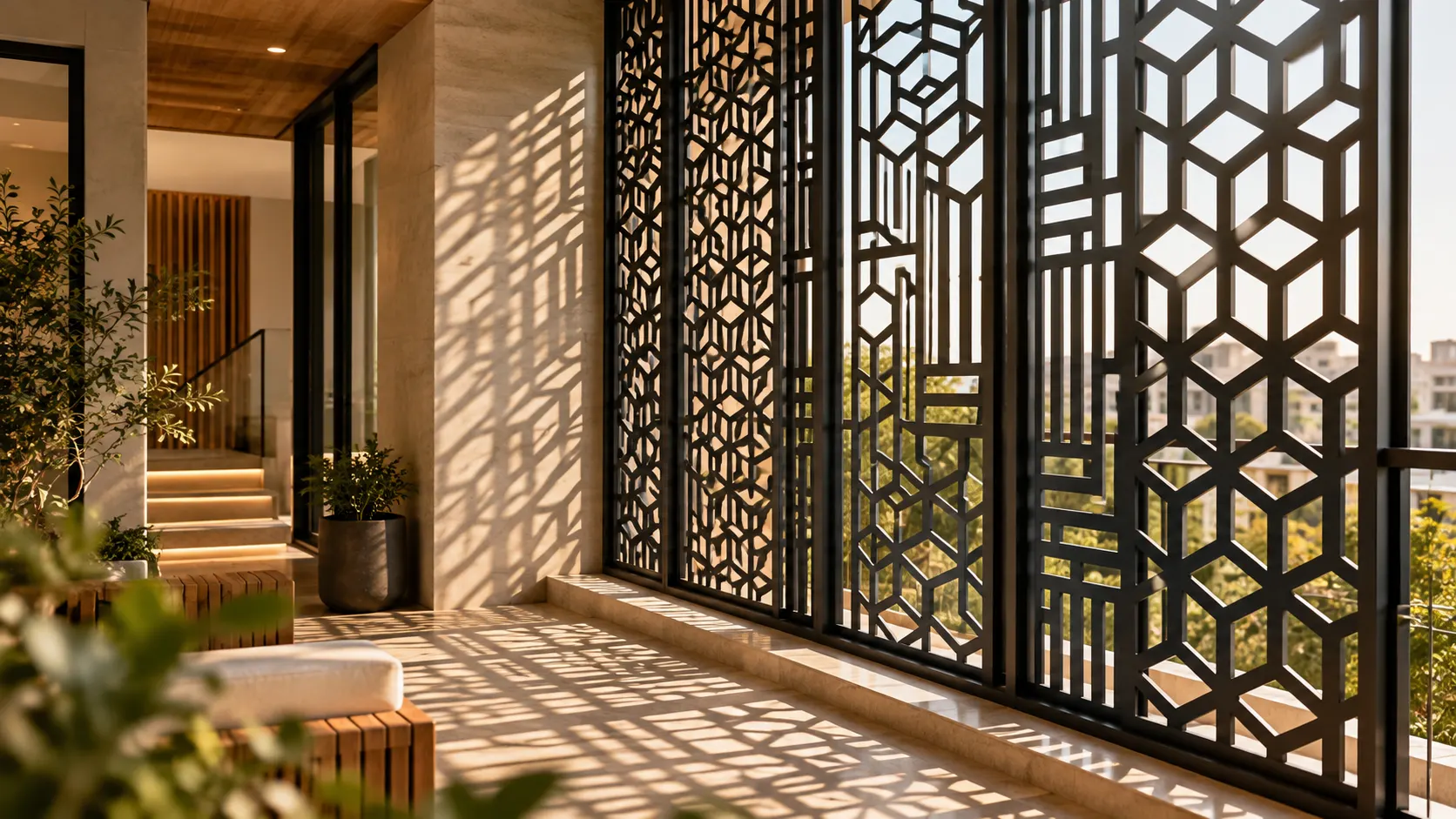
Grids, diamonds, hexagons and staggered lines give a clean, contemporary look. They suit apartment balconies, staircase windows and minimalist elevations. Their regular spacing makes it easy to control how open the screen is, and simple geometry is the most forgiving shape to cut and coat well.
Floral and Traditional Motifs
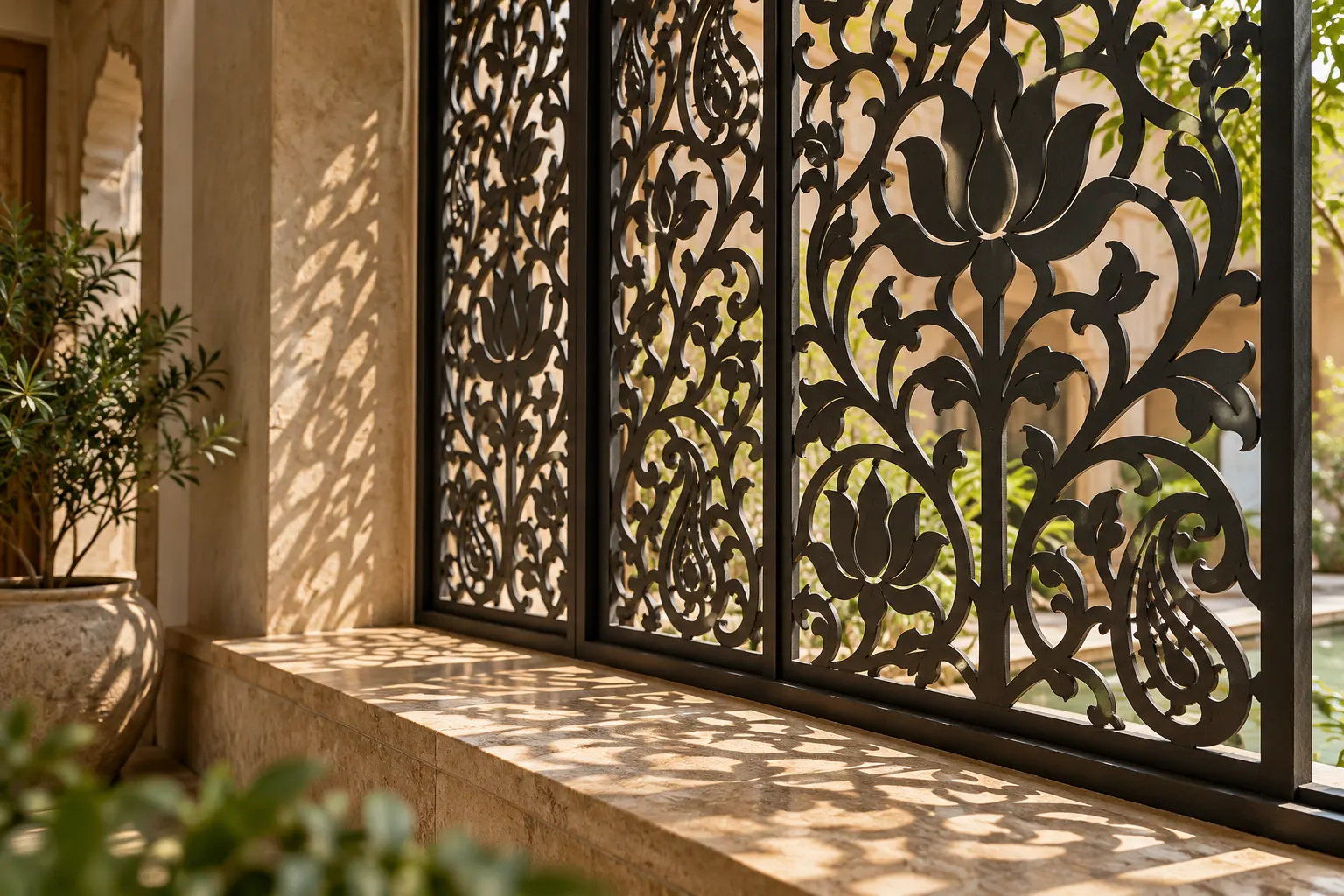
Lotus, vine, and paisley-style patterns work well on courtyard-facing windows, pooja room openings, and homes with a heritage look. Keep the motif large and the connecting lines reasonably thick. A heavy, simplified floral reads better in iron than a delicate one, which would suit wood or stone more.
Iron Grill Jali Design for Doors and Gates
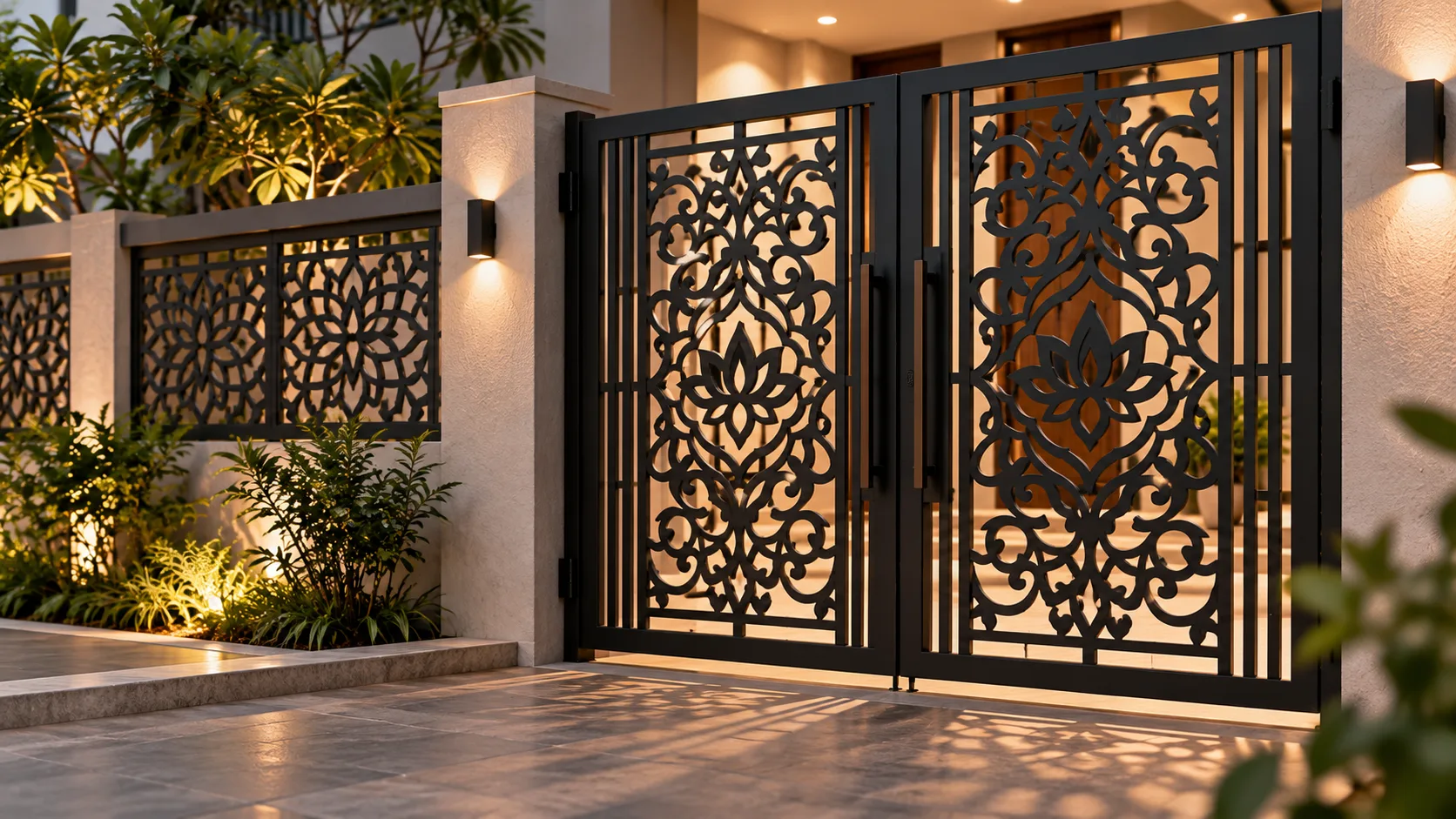
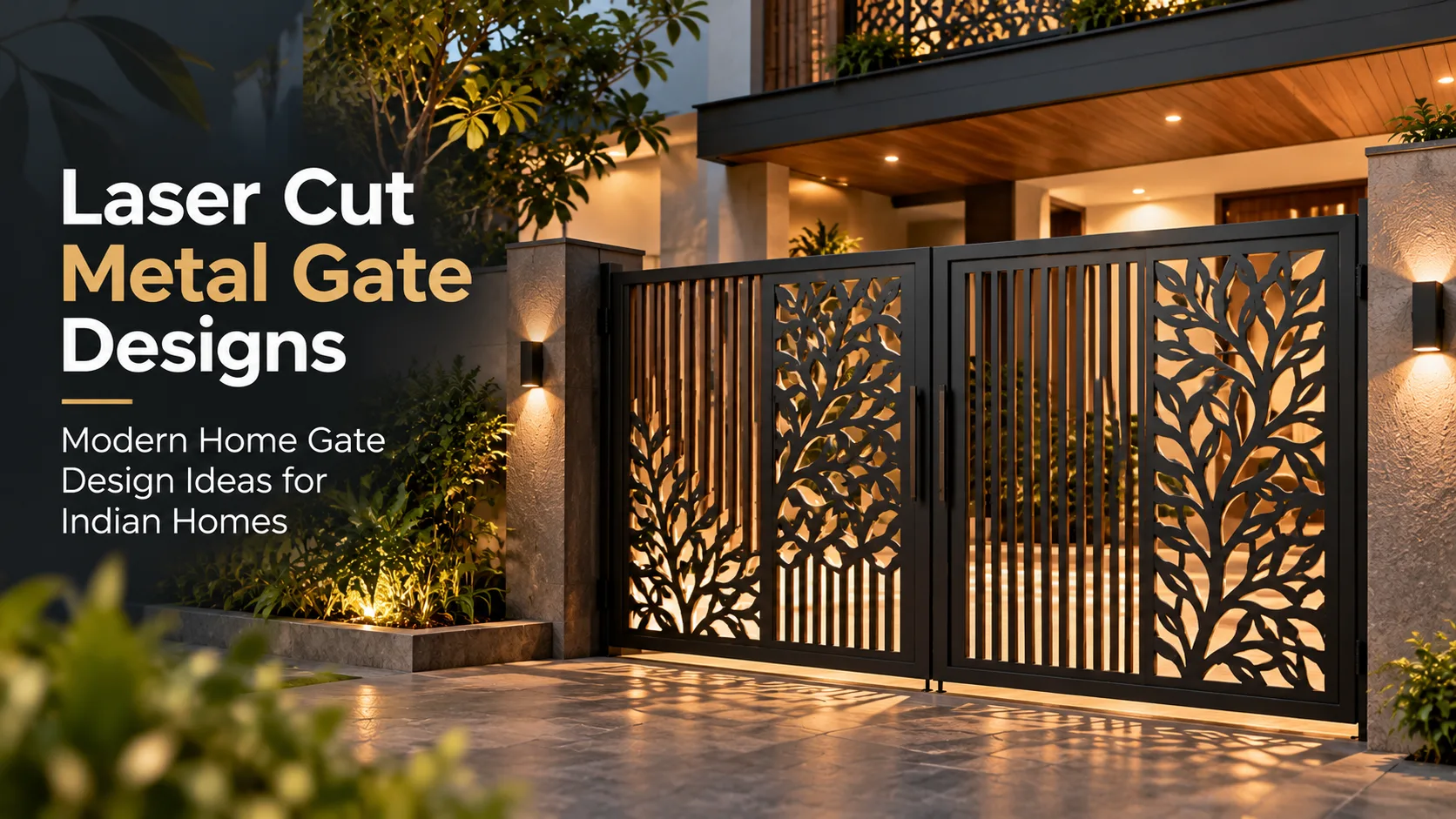
Main gates and grill doors take the most wear, so an iron grill jali design here should be sturdy and low on fine detail. A common approach is a solid lower panel for strength and privacy, with a more open jali above to let light and air through. Check that the bars or borders around the pattern are thick enough that the panel will not flex when pushed.
Window Jali Design: Security, Light and Privacy
A good window jali design starts with the room, not the pattern. Ground-floor windows need the most security, so they suit a dense, sturdy jali. Bathrooms and kitchens benefit from tighter patterns that give privacy and still let steam and smoke escape. Bedrooms usually want a balance: enough cover to feel private at night, enough openness for morning light.
Gap size is the main lever. Small gaps give privacy and block more light and airflow. Large gaps do the opposite. A practical way to choose is to pair the pattern with the job. Use a tighter pattern where privacy matters most, and an open one where you want light and ventilation, such as a staircase or a living room window facing a quiet side.
One installation point is easy to overlook. Anchor the jali to the concrete frame, not to brickwork alone. Brick can crumble under load or when someone forces the grill, which defeats the security purpose. Ask your fabricator how the fixings will be done before you approve the design
Metal Facade Jali: Using Iron on the Exterior
A metal facade jali is a screen on the outside of the house. It can cover a balcony, a stair core, or part of the front wall. It shades the glass behind it, gives privacy to the rooms inside, and becomes the signature of the elevation. Gates and balcony screens are the other common exterior uses.
Exterior iron faces sun, rain and dust all year, so it needs more than a decorative design. Specify a protective finish, either powder coating or galvanizing, and use a thicker sheet than you would indoors so the panel stays flat in heat and wind. Ask the fabricator to coat cut edges and weld points too, since rust starts there first.
For a cohesive look, carry one design thread across the gate, the window jali and the facade screen. They do not need to be identical. Repeating the same motif at different scales is enough to tie the elevation together.
Orientation matters. On west-facing walls, where afternoon sun is strongest, a denser pattern cuts glare and heat. On shaded sides, you can open the pattern up.
Laser-Cut Window Grill vs. Hand-Forged vs. CNC Iron Jali
The method you choose decides how much detail you can have, how consistent repeats will be, and how the finished piece feels. A laser-cut window grill gives crisp, repeatable shapes, while hand-forged work gives a handmade character. This table is a general comparison, and a fabricator can confirm what applies to your project.
Method | Best for | Watch out for |
Hand-forged | Traditional, handmade character; custom one-off gates and railings | Slower to produce; less consistent repeats; finish quality depends on the craftsman |
CNC-cutting | Larger production runs and repeatable patterns across many panels | The edge finish may need cleaning; confirm the cutting process and sheet thickness. |
Laser-cutting | Clean edges and precise, repeatable patterns on window and facade panels | Fine detail is still limited by sheet thickness; edges need coating to stop rust. |
If you want identical panels across a whole elevation, a cut method gives the most consistency. If you want a single statement gate, hand-forging may be the better fit. For precision cutting, share your pattern and sheet thickness with a laser cutting service and ask for a sample edge before you approve the batch.
Iron Jali Cost and Rust Care
Prices vary by city, thickness, pattern complexity, and finish, so treat these as indicative only, and remember that laser-cut work is usually charged per square foot, with the rate rising as the sheet gets thicker and the pattern more detailed. Published guides from Comaron and Spacewood put a wrought iron grill at roughly Rs 350 to 500 per sq ft and a metal jali with powder coating from about Rs 500 to Rs 1,200 or more per sq ft. Always get a written quote for your own dimensions.
Rust care is where most iron jalis succeed or fail:
- Prime first. Ask for a zinc-rich or anti-rust primer on bare metal before any paint.
- Choose a durable finish. Powder coating or galvanizing lasts longer than ordinary paint, especially outdoors.
- Seal the edges. Cut edges and welds rust first, so make sure they are coated.
- Touch up early. Fix chips and scratches as soon as you notice them, and plan a repaint cycle based on how exposed the panel is.
When choosing, consider four things: floor level (security needs), style, climate (coastal air is harsher on iron), and budget. Once you know the size and finish you want, get a quote from your fabricator.
Conclusion
Pick the pattern for the room, the method for the level of detail, and the coating for longevity. Bold, open patterns suit iron best; a laser-cut or CNC process suits repeated panels; and a proper primer and powder coat determine how long it all looks good. Whether you are planning one window or a full elevation, a thoughtful jali design for home pays off every day in light, privacy, and peace of mind. If you have an opening in mind, request a quote for a custom iron jali.